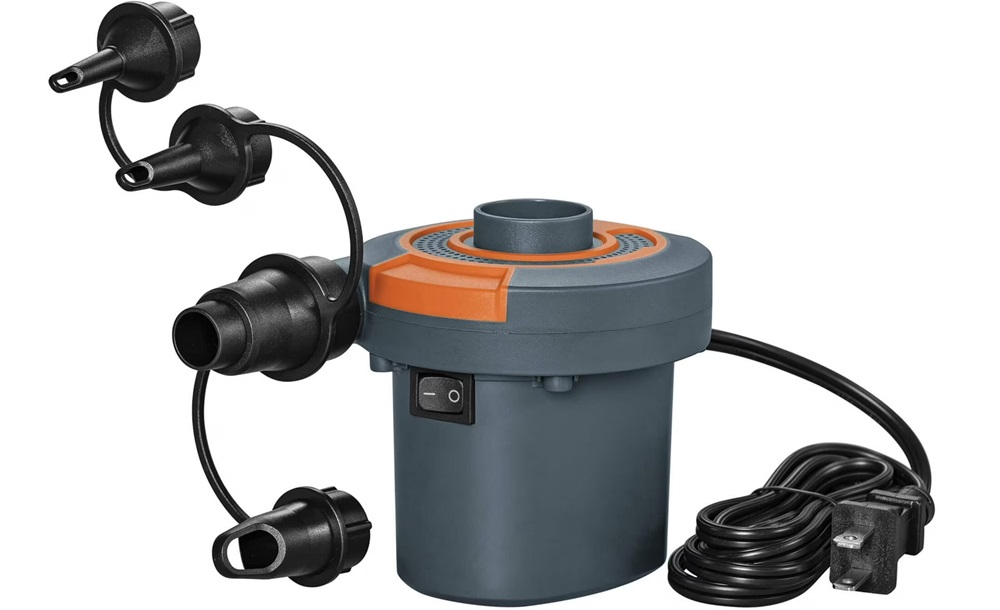
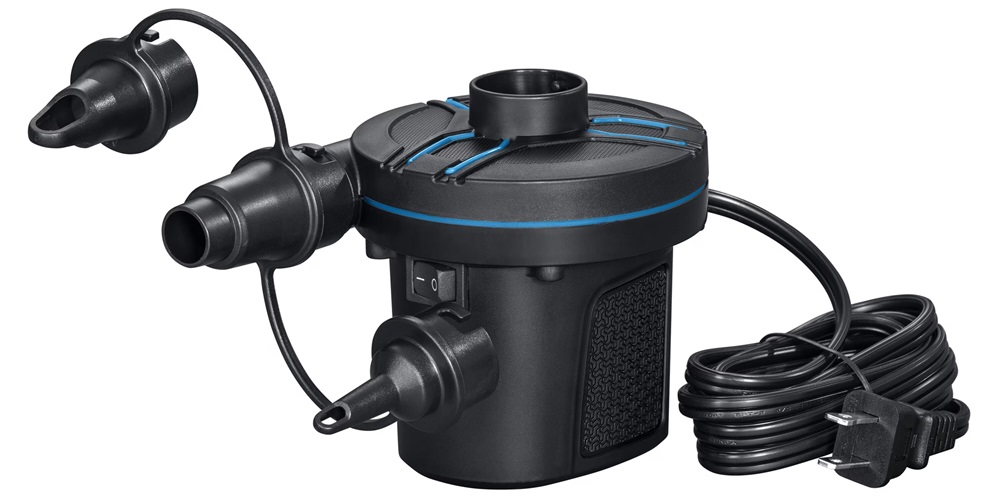
An ozark trail air pump is designed for one specific job – high volume, low pressure inflation.
Use it right and it works great. Use it wrong and you’ll burn out the motor in minutes. Here’s exactly what you can and can’t inflate with one.
What Does an Air Pump Actually Do Well?
It moves large amounts of air at low pressure – that’s its whole design. Air mattresses, pool floats, inflatable kayaks, camping pads – these are the items a pump like this was built for. They need a lot of air fast, but they don’t need it forced in at high pressure.
A typical air mattress sits at around 0.5 to 1.5 PSI. An inflatable pool float is similar. Your pump can fill both of these with zero strain on the motor. The valve matches, the pressure is within range, and the job gets done in a few minutes.
What makes these items pump-friendly is the combination of large internal volume and flexible walls. The pump doesn’t have to work hard – air flows in freely, the item expands, and the motor stays cool.
What Will Damage or Burn Out the Motor?
Anything that requires sustained high pressure is a problem – and that’s a hard line, not a soft guideline.
Car tires, for example, need anywhere from 30 PSI on the low end to 80 PSI for trucks and SUVs. Road bike tires can go up to 130 PSI.
These numbers are 20 to 100 times higher than what a standard electric air pump is rated for. Running the motor at that load for even a few minutes generates enough heat to melt internal components.
Sports balls are a grey area. A basketball needs about 8 PSI. That’s technically within some pump specs – but the tiny needle valve creates backpressure, and if your pump doesn’t have a proper pressure gauge, you’ll overshoot the target easily and end up with a damaged ball or a strained motor.
The biggest mistake people make is treating “it works for a few seconds” as “it’s fine.” The motor doesn’t fail immediately – it fails after repeated overuse, or after one long session at too-high pressure.
How Do You Know If You’re Pushing the Pump Too Hard?
You don’t always get a warning. But here are a few signs to watch for:
The motor gets noticeably hot to the touch during or after use. The pump slows down mid-inflation or sounds strained.
The item you’re inflating is barely getting firm even after several minutes. You’re using a needle adapter on a small valve and the pump is running continuously without building pressure.
If any of these happen, stop immediately. Let the motor cool for at least 20–30 minutes before trying again.
Most consumer-grade electric pumps aren’t designed for continuous duty cycles. Many are rated for 10 to 15 minutes of use before they need a rest. That’s not a flaw – it’s just how the motors are built.
Can You Use It for a Stand-Up Paddleboard?
Sort of – but carefully. SUPs need 12 to 15 PSI to be rigid enough to stand on. Some electric pumps marketed specifically for outdoor use can hit this range. But pushing any small motor to its upper limit repeatedly shortens its lifespan fast.
If you’re using an ozark trail air pump and it does reach SUP pressure, watch the temperature closely and stop if the motor feels hot. For people who paddle regularly, a dedicated high-pressure pump is a smarter long-term investment.
FAQs
Can I use an electric air pump to inflate balloons?
Ans: No, and it’s more dangerous than people realize. Balloons have almost no resistance once they start filling, which means the pump pushes air with nothing to push against. This can cause sudden bursts, damage the pump’s internal valves, or create rapid pressure spikes. Use a manual hand pump for balloons.
How long can I run my air pump continuously?
Ans: Most consumer models are built for 10 to 15 minutes of continuous use. After that, give the motor at least 20 minutes to cool down. Running it past this point doesn’t just risk a burnout – it can void your warranty and create a fire hazard if the motor gets hot enough.
Why does my pump slow down mid-use?
Ans: That usually means one of three things: the motor is overheating, the item you’re inflating is near capacity and creating backpressure, or the battery (if cordless) is running low. Check all three before continuing.
Is there a PSI limit I should never exceed?
Ans: Yes. For most standard electric pumps – including the ozark trail air pump – 3 to 5 PSI is the safe upper range for normal use. Some models can reach 15 PSI for SUPs, but that’s the ceiling, not a routine target.
Can I use it on a bike tire?
Ans: For a mountain bike with wide, low-pressure tires (under 30 PSI), you might get away with it in a pinch. For road bikes that need 80 to 130 PSI, absolutely not – you’ll burn out the motor before you get anywhere close to the right pressure.