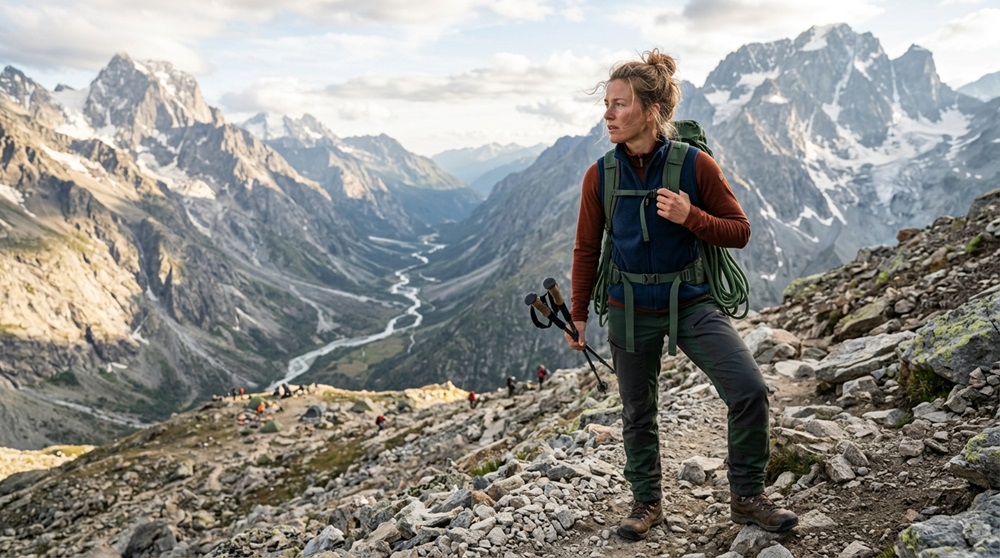
Breaking in women’s trail running shoes wrong can ruin your race day or turn a long hike into a painful experience.
Research shows that blisters are one of the top complaints among trail runners, affecting nearly 40% of participants in long-distance events.
Pair your new shoes with well-fitted womens hiking pants and proper socks, and you’re already ahead of most beginners. Here’s what you actually need to do.
How long should you wear new shoes before a race?
Start at least four to six weeks before your event — that’s the sweet spot most experienced trail runners use.
Wearing new shoes for the first time on race day is one of the biggest mistakes you can make. Your feet need time to adjust to the shoe’s shape, cushioning, and sole stiffness.
Start with 20-to-30-minute walks in your neighborhood. Then move to short trail runs of two to three miles. Gradually add mileage each week. By week three or four, your shoes should feel like an extension of your foot, not a foreign object.
One thing people get wrong is skipping the gradual part. They wear the shoes for one long run and call it broken in. That’s not how it works. Your foot’s skin needs time to toughen up in the exact spots where the shoe makes contact.
What socks actually prevent blisters?
Moisture-wicking, seamless socks in the right thickness make a real difference — cotton is the one thing you want to avoid.
Cotton holds sweat against your skin. Trail running creates friction, and wet skin blisters faster than dry skin.
Merino wool or synthetic socks with a snug fit are your best option. Look for socks with no raised seams around the toe box, since that’s where most blisters start.
The thickness of the sock also matters. If your shoe fits well with a thin sock, don’t switch to a thick one on race day.
Your foot will feel cramped, and the friction points shift. Wear the same sock thickness during every break-in session that you plan to wear during the actual race or hike.
Hot spots vs blisters — what’s the difference?
A hot spot is the warning signal; a blister is what happens when you ignore it.
When you feel a burning or rubbing sensation on a specific part of your foot, that’s a hot spot forming.
At that point, if you stop and apply a blister prevention patch or bodyglide, you can usually stop it from turning into a full blister.
A blister forms when the top layer of skin separates from the layer beneath it due to repeated friction, and fluid fills the gap.
During break-in walks and runs, pay attention to these signals. Mark where the hot spots appear — heel, pinky toe, under the ball of your foot — and address those areas with protective tape or anti-friction balm before your next session.
Does shoe fit change how fast they break in?
Yes, a bad fit means no amount of break-in time will fix the problem.
Women’s trail running shoes should have about a thumb’s width of space between your longest toe and the front of the shoe. Your heel should sit firmly with no slipping. If the shoe pinches across the midfoot or squeezes the toe box, that’s a fit issue, not a break-in issue.
A 2019 study published in the Journal of Foot and Ankle Research found that ill-fitting footwear was a primary cause of foot pain in endurance athletes. Getting the right fit first means the break-in process is mostly about comfort adjustment, not fixing structural problems.
Frequently Asked Questions
Can you speed up the break-in process?
Not really, and trying to rush it usually leads to blisters. The four-to-six-week timeline exists because your skin and foot shape need consistent, repeated exposure — not one aggressive long run.
Should you wet your shoes to break them in?
No, that’s an old leather boot trick. Modern trail running shoes use synthetic materials that don’t respond the same way. Getting them wet and then wearing them is more likely to cause friction and irritation than soften the material.
What if you get a blister during break-in?
Stop that session, clean the area, and apply a blister bandage. Give it a day or two to heal before continuing. Pushing through a blister makes it worse and can sideline you for longer.
Do insoles help with break-in?
Custom or aftermarket insoles can reduce pressure on specific spots and make the process more comfortable, especially if you have high arches or flat feet. Just make sure you break them in at the same time as the shoes, not separately.
Does trail surface matter during break-in?
Yes. Break in your shoes on surfaces similar to your race or hike terrain. If you’re planning a rocky mountain trail, don’t do all your break-in walks on pavement. The shoe flexes differently depending on the surface, and your foot adjusts accordingly — right alongside your womens hiking pants.