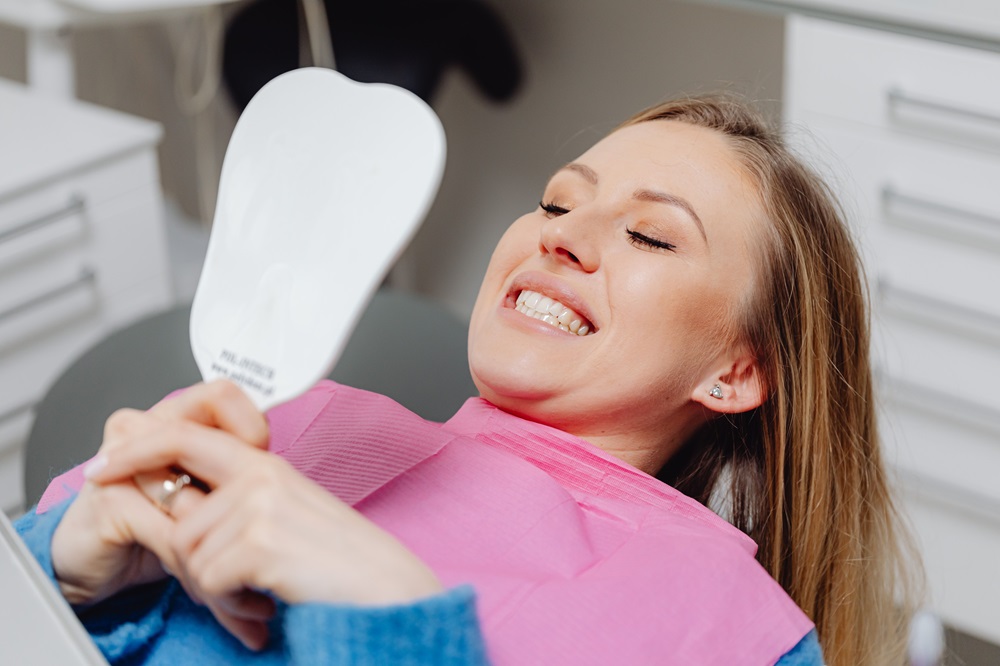
You’ve probably seen the before and after photos. Bright, noticeably whiter teeth after a single appointment. But what actually happens during an in-office whitening session, how much does it cost, and does it hold up over time?
Here’s a clear breakdown.
What is in-office teeth whitening?
In-office teeth whitening is a professional treatment done at a dental clinic. Your dentist applies a high-concentration peroxide gel directly to your teeth, then uses a light or laser to speed up the whitening process.
The whole thing usually takes about an hour. Some treatments break it into 3 or 4 rounds of 15 minutes each, done back to back in the same sitting.
One well-known option is pola office whitening, which uses a hydrogen peroxide gel activated by a light source. It’s designed to be fast, with some patients seeing results in a single visit.
How white will your teeth actually get?
This is where a lot of people have unrealistic expectations going in.
Teeth are not naturally bright white. The most common natural tooth shade is called A2, which is a warm off-white. After professional whitening, many people reach an OM1 shade, which is noticeably lighter.
So the result is a dazzling, natural-looking white. It probably won’t look like veneers or a social media filter. And that’s fine, because the goal is a healthy-looking smile, not a theatrical one.
A few things affect how white your teeth can get:
- Your starting shade
- The number of rounds completed in the session
- Whether you have any existing dental work (crowns and veneers don’t whiten)
- Your enamel thickness
What does the process feel like?
Most people handle it well, but sensitivity is common.
Here’s a realistic account: some people get through 3 of 4 planned rounds before the sensitivity becomes too uncomfortable to continue. The first couple of rounds are manageable. The third starts to feel like pressure or a mild ache. Drinking anything cold that day can be painful.
Sensodyne or another sensitivity toothpaste usually helps a lot. Most people feel back to normal within 24 to 48 hours.
If you have naturally sensitive teeth, tell your dentist before you start. They can adjust the gel strength or time between rounds.
How much does it cost?
In-office whitening generally runs between $300 and $700 depending on the clinic and what’s included.
Some treatments include custom take-home trays as part of the package. Those trays matter if you want to maintain your results long term, so it’s worth asking whether they’re included before you book.
How long do the results last?
Several years, if you take care of your teeth. Here’s what affects how long the whitening holds:
- Coffee, tea, red wine, and dark sodas stain teeth over time. Drinking them through a straw helps reduce contact with your enamel.
- Smoking speeds up re-staining.
- Touch-up trays (the at-home kind your dentist provides) help you maintain the shade between professional treatments.
- Diet during the whitening window matters too. Avoiding dark foods and drinks for at least 24 to 48 hours after treatment gives the enamel time to stabilize.
In-office vs. at-home whitening
At-home options like whitening strips, tray-based kits, and whitening toothpastes can work. But they take weeks, require daily consistency, and use lower-concentration gels.
In-office whitening uses a much stronger gel, which means faster and more visible results in one sitting. The tradeoff is higher cost and temporary sensitivity.
If you want a reliable result before an event, an in-office treatment is the more predictable choice.
Where to get it done
If you’re in Regina, SK, Pasqua South Dental is a good starting point. Their team offers pola office whitening and can walk you through whether you’re a good candidate based on your current tooth shade and sensitivity level.
Dr. and the team there handle whitening consultations regularly, so you’ll get a proper assessment before anything gets applied.
You can book a consultation to discuss what results are realistic for your specific teeth before committing to the full treatment.

FAQ
Does in-office whitening work on crowns, veneers, or fillings?
No. Whitening gel only works on natural tooth enamel. Existing dental restorations will stay at their current shade. If you have crowns or veneers on your front teeth, talk to your dentist before whitening, since the contrast can become noticeable.
Is in-office whitening safe?
Yes, when done by a trained dental professional. The main side effect is temporary sensitivity. Your dentist will protect your gums during the treatment to prevent irritation from the gel.
How many sessions do I need?
Most people see their target result in one session. If your teeth are heavily stained, your dentist might recommend a follow-up or a take-home maintenance plan.
Can I eat normally after the treatment?
For the first 24 to 48 hours, stick to light-colored foods and avoid staining drinks. After that window, normal eating is fine, though cutting back on heavy staining foods and drinks will help the results last longer.
Will whitening toothpaste maintain my results?
It helps a little. Whitening toothpastes remove surface stains, but they don’t change the underlying shade of your enamel the way a professional treatment does. Pairing them with periodic touch-up trays gives better long-term results.
How often can I get in-office whitening done?
Most dentists suggest waiting at least 6 to 12 months between professional whitening sessions. Doing it too frequently can wear down enamel over time.
What if I have sensitive teeth? Can I still whiten?
Yes, but you should let your dentist know beforehand. They can use a lower-concentration gel, reduce the session time, or recommend a desensitizing treatment before you start. It’s manageable for most people with some adjustments.