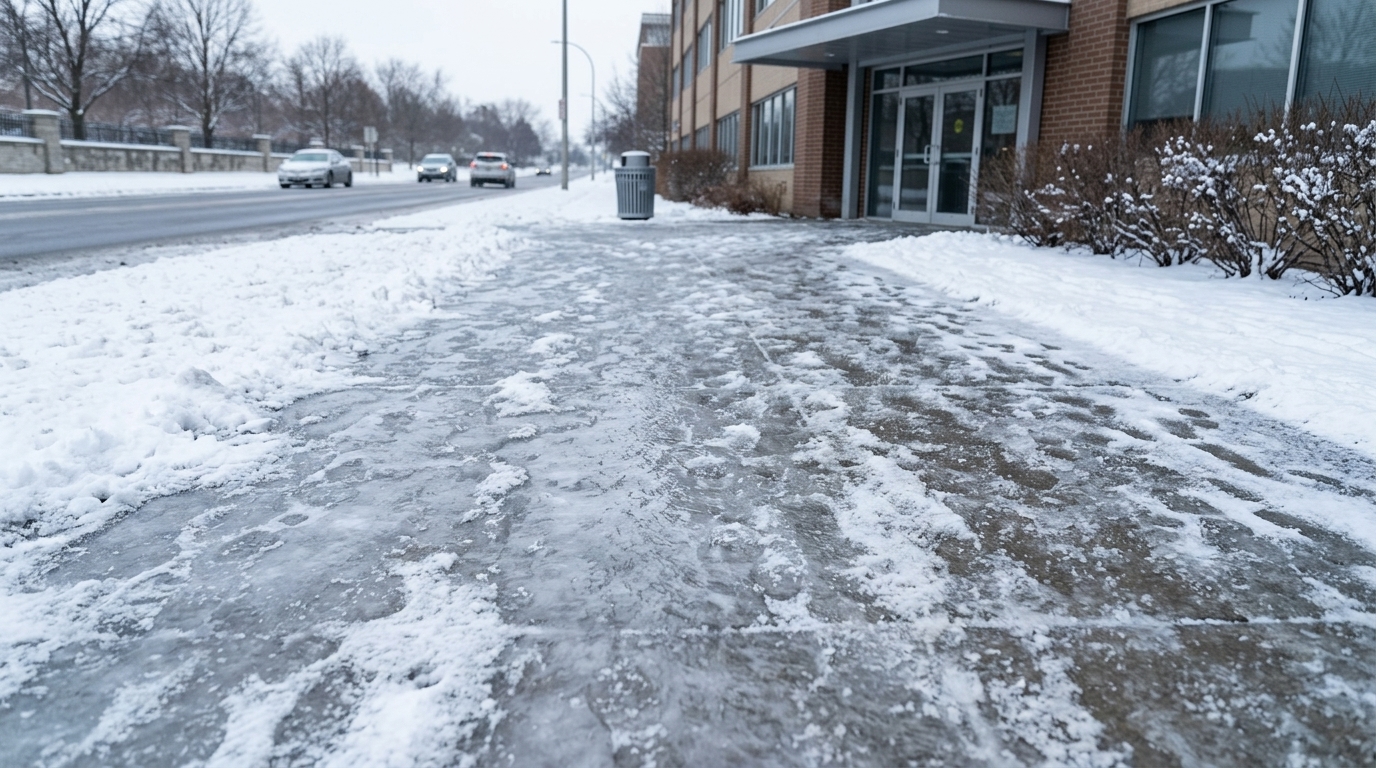
Snow and ice accidents in New York can happen on sidewalks, parking lots, stairs, entryways, apartment walkways, driveways, commercial properties, and public areas. These cases are often fact-specific because liability may depend on who controlled the property, when the snow or ice formed, whether the hazard was visible, and whether the responsible party had time to address it. People researching winter fall claims may review guidance from a slip and fall accident attorney resource to understand how snow and ice claims are generally evaluated.
Quick Answer
A property owner, business, landlord, tenant, contractor, or public entity may be liable for a snow or ice injury in New York when the evidence shows that a dangerous condition existed, the responsible party created it or had notice of it, and the condition caused the fall. However, winter fall claims can be complicated. Weather timing, storm conditions, snow removal efforts, inspection records, lighting, footwear, photos, witnesses, and medical documentation may all affect the claim.
Key Takeaways
- Snow and ice claims usually depend on proof of a dangerous condition and notice.
- Property owners are not automatically liable just because someone falls on ice.
- Evidence should be collected quickly because snow and ice can melt, be cleared, or change within hours.
- A snow removal contractor may be relevant if maintenance work was performed carelessly.
- Public property and municipal sidewalk claims may involve shorter notice deadlines.
- Photos, weather records, incident reports, witness statements, and medical records can be important.
- New York winter fall cases often require careful review of timing, location, control, and maintenance records.
Why Snow and Ice Claims Are Different From Other Fall Cases
Snow and ice claims are different because the condition can change quickly. A wet sidewalk may freeze overnight. A parking lot may be plowed but not salted. Ice may be hidden under fresh snow. A roof, awning, or gutter may drip water that later refreezes near an entrance.
Unlike a broken stair or uneven floor, snow and ice are often temporary. This makes timing especially important. A claim may depend on when the storm began, when it ended, when the area was inspected, when it was cleared, and whether the hazard existed long enough for a responsible party to discover and fix it.
These cases also depend on location. A fall on a private driveway, apartment complex walkway, store entrance, commercial parking lot, public sidewalk, or municipal property may involve different responsible parties and different evidence.
What Must Be Proven in a Snow or Ice Slip and Fall Claim?
A winter slip and fall claim usually requires more than showing that a person fell. The injured person may need to show that a dangerous snow or ice condition existed, that the responsible party had a legal duty connected to the area, that the duty was breached, and that the hazard caused the injury.
Several questions usually matter:
- Where exactly did the fall happen?
- Who owned, occupied, controlled, or maintained that area?
- Was the snow or ice visible?
- Was the condition newly formed or present for a longer period?
- Was a storm ongoing?
- Was snow removal performed?
- Was the area salted, sanded, shoveled, plowed, or inspected?
- Did snow removal make the condition worse?
- Were there witnesses?
- Are there photos or video?
- Did the injury require medical treatment?
The stronger the evidence, the easier it may be to explain how the fall happened and who may be responsible.
Who May Be Responsible for Snow and Ice Hazards?
Several parties may be reviewed after a winter fall. Liability depends on ownership, control, maintenance obligations, contract duties, and the accident location.
Potentially responsible parties may include:
- Property owners
- Landlords
- Tenants
- Commercial businesses
- Shopping centers
- Apartment complexes
- Property management companies
- Snow removal contractors
- Maintenance companies
- Municipalities or public entities
- Homeowners in certain circumstances
- Contractors responsible for sidewalks, entrances, or parking areas
A premises liability lawyer resource may help readers understand why ownership, occupancy, control, and maintenance responsibility matter in fall-related injury claims.
The Importance of Notice in Winter Fall Claims
Notice is one of the most important issues in snow and ice cases. A property owner or responsible party may be liable when they created the dangerous condition or had actual or constructive notice of it.
Actual notice means the responsible party knew about the hazard. For example, a tenant may have complained about icy stairs, or an employee may have reported a frozen entryway.
Constructive notice means the condition existed long enough that the responsible party should have discovered and corrected it through reasonable inspection. This often depends on timing, weather records, maintenance logs, photographs, and witness statements.
A property owner’s general awareness that winter weather can create slippery conditions is usually not the same as proof of notice of the specific hazard. The claim is stronger when the evidence identifies the location, condition, and timing of the snow or ice.
What Is the Storm in Progress Issue?
New York snow and ice claims may involve the “storm in progress” issue. In general terms, this concept recognizes that property owners may not be required to remove snow and ice while a storm is actively ongoing. However, the analysis can become more complicated if snow removal was attempted during the storm or if the dangerous condition existed before the storm began.
This issue can make winter fall claims heavily dependent on weather evidence. Hourly snowfall, freezing rain, temperature changes, sleet, refreezing, wind, and precipitation timing may all matter.
A property owner may argue that the fall happened during an active storm. An injured person may respond with evidence that the storm had ended, the condition formed earlier, the hazard was created by poor snow removal, or the dangerous ice came from drainage, refreezing, or a recurring property defect.
Snow Removal Can Create Liability
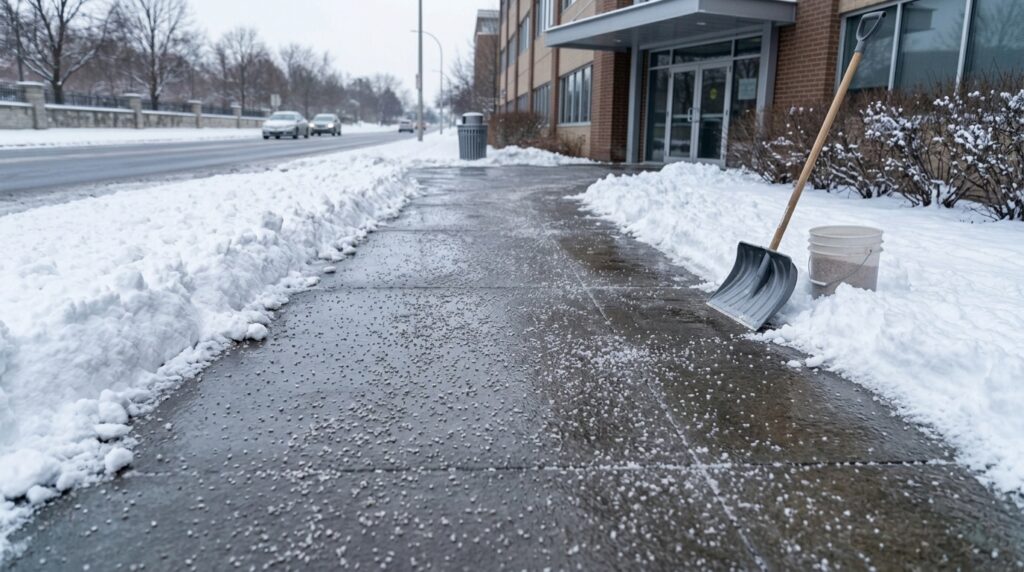
Snow removal does not always eliminate liability. In some cases, careless snow removal can create or worsen a dangerous condition.
Examples may include:
- Plowing snow into pedestrian walkways
- Leaving ridges of ice near entrances
- Failing to salt after shoveling
- Creating runoff that refreezes
- Blocking drainage areas
- Piling snow where it melts and refreezes across a walkway
- Clearing part of a sidewalk but leaving a hidden icy patch
- Failing to inspect after snow removal
If a snow removal contractor was hired, the contract may become important. It may show which areas the contractor was responsible for, when service was required, whether salting was included, and whether inspections were part of the agreement.
Sidewalk Snow and Ice Liability
Sidewalk liability can depend on the location and local rules. In New York City, for example, Administrative Code § 7-210 states that certain abutting real property owners have a duty to maintain sidewalks in a reasonably safe condition and may be liable for injuries caused by negligent failure to do so.
Outside New York City, rules may differ depending on the municipality, property type, ownership, local codes, and whether the sidewalk is public or private. Some claims may also involve prior written notice rules when a municipality is involved.
This is why winter sidewalk claims should be evaluated based on the exact location. The same type of fall may involve different legal issues depending on whether it happened outside a store, apartment building, private home, school, municipal building, or public walkway.
Parking Lot Snow and Ice Accidents
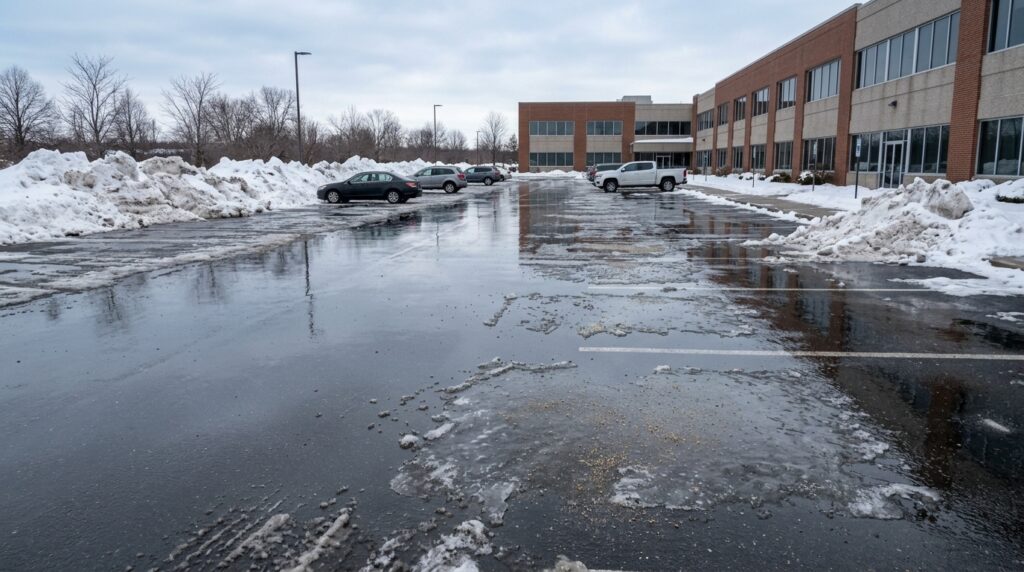
Parking lots are common locations for winter falls. Snow piles, drainage problems, refreezing, poor lighting, uneven pavement, and inadequate salting can create hazards for customers, employees, delivery workers, and visitors.
Parking lot claims may involve property owners, store tenants, property managers, maintenance contractors, or snow removal companies. Important evidence may include plowing records, salt logs, surveillance footage, lighting conditions, photos, weather reports, and witness statements.
A key question is whether the responsible party had a reasonable opportunity to address the danger. Another question is whether snow removal efforts made the lot more dangerous.
Apartment, Condo, and Rental Property Winter Falls
Winter falls at apartment buildings, condo complexes, and rental properties may involve stairs, walkways, parking lots, ramps, entrances, courtyards, laundry areas, or common areas. These claims often focus on who had control over the area.
Landlords, property managers, condo associations, maintenance companies, or snow removal contractors may be relevant depending on the property structure. Lease terms, maintenance contracts, inspection logs, and tenant complaints may help show who was responsible.
Evidence of recurring ice may be especially important. If water regularly pooled and froze near the same entrance or walkway, prior complaints, photos, repair requests, or maintenance records may support the claim.
Store and Business Entrance Winter Falls
Business entrance areas are common winter fall locations because snow and slush are tracked indoors. Mats, wet floors, icy thresholds, and poorly maintained entryways can create hazards.
Business owners may need reasonable inspection and maintenance practices, especially during winter weather. Evidence may include surveillance footage, employee cleaning logs, incident reports, floor mats, warning signs, weather conditions, and customer complaints.
A business may argue that the condition appeared suddenly. The injured person may need evidence showing that the slippery condition existed long enough to be discovered or that the business’s snow and slush control practices were unreasonable.
What Evidence Helps Prove a Snow or Ice Claim?
Evidence should be preserved as quickly as possible. Snow and ice may melt or be removed before an investigator, attorney, insurer, or property manager reviews the scene.
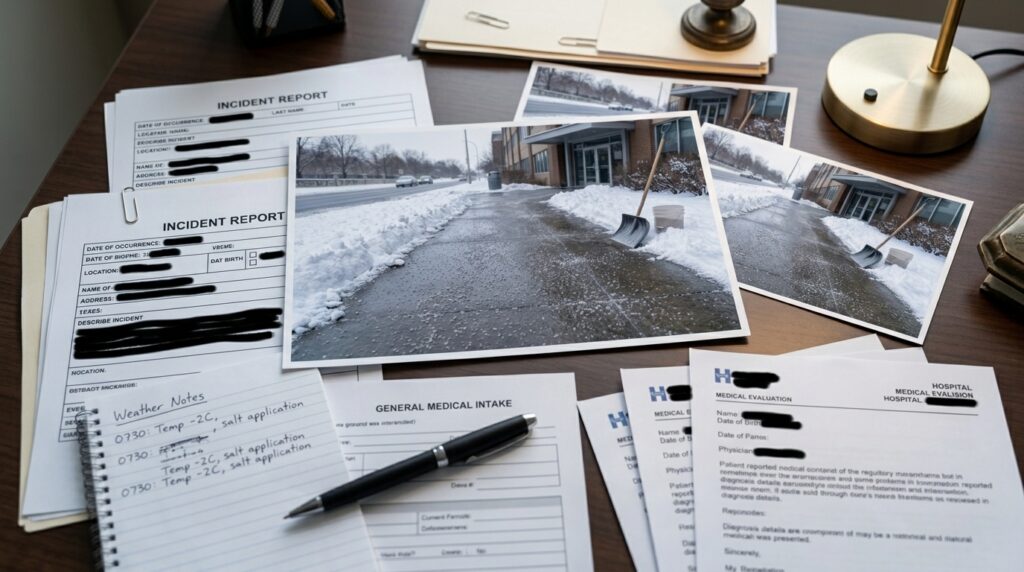
Helpful evidence may include:
- Photos of the exact snow or ice patch
- Wide-angle photos showing the location
- Close-up photos showing ice texture or buildup
- Video of the walking path
- Witness names and contact details
- Incident reports
- Surveillance footage
- Weather reports
- Snow removal logs
- Salt or sanding records
- Maintenance records
- Prior complaints
- Lease or maintenance agreements
- Medical records
- Photos of footwear
- Clothing condition after the fall
- Receipts showing the time and location
- Proof of lost wages
For broader winter-specific claim context, readers may review a guide on winter property hazards and how snow or ice conditions may affect injury claims.
Why Weather Records Matter
Weather records can help explain when snow, sleet, rain, freezing rain, or temperature drops occurred. In some cases, weather data may support the property owner’s argument that a storm was ongoing. In other cases, it may support the injured person’s argument that the storm had ended or that ice formed from melting and refreezing.
The National Weather Service winter safety guidance provides public information on winter weather hazards. In an injury claim, more detailed local weather records may be needed to evaluate the exact timing and conditions near the accident location.
Weather evidence can be especially important when the parties disagree about whether the ice was fresh, old, recurring, or created by property drainage.
What If the Fall Happened on Public Property?
Falls on public property can involve additional rules and shorter deadlines. If the accident happened on a municipal sidewalk, public parking lot, public building entrance, school property, bus stop, train station area, or government-controlled location, the claim may require early notice.
New York’s General Municipal Law § 50-e generally requires a notice of claim within 90 days for certain tort claims against public corporations. This is much shorter than the deadline that applies to many ordinary negligence claims.
Because public property cases can involve strict notice rules, the location should be identified carefully. A fall near a public building or sidewalk may require review of maps, ownership records, municipal responsibility, prior written notice rules, and maintenance obligations.
Medical Documentation After a Winter Fall
Medical care is important after a snow or ice fall because injuries can be serious. A fall can cause fractures, back injuries, hip injuries, head trauma, wrist injuries, shoulder injuries, knee injuries, torn ligaments, concussions, and chronic pain.
Medical records can help connect the fall to the injury. They may show when treatment began, what symptoms were reported, what diagnostic tests were ordered, and whether the injury affected work or daily activities.
Delays in treatment can create disputes. An insurer may argue that the injury was not caused by the fall or was not serious. This does not automatically defeat a claim, but it can make documentation more difficult.
Common Mistakes After a Snow or Ice Fall
Some mistakes can make winter fall claims harder to prove.
Common mistakes include:
- Leaving without reporting the fall
- Failing to photograph the exact ice or snow condition
- Taking only close-up photos without showing location context
- Not identifying witnesses
- Waiting too long to seek medical care
- Throwing away footwear worn during the fall
- Not asking whether surveillance footage exists
- Failing to preserve receipts or proof of location
- Posting about the fall on social media
- Assuming the property owner is automatically liable
- Missing government notice deadlines
The strongest claims usually include clear location proof, timing evidence, medical documentation, and records showing who had responsibility for the area.
When Legal Guidance May Be Useful
Legal guidance may be helpful when the fall caused serious injury, the property owner denies responsibility, the condition changed quickly, a snow removal contractor was involved, the accident happened on public property, or surveillance footage may need to be preserved.
People comparing local legal resources may review a Farmingdale legal office location when researching Long Island winter fall claim information.
FAQs About Snow and Ice Liability in New York
Is a property owner automatically liable for a fall on ice?
No. A property owner is not automatically liable just because someone fell on ice. The injured person usually needs evidence showing a dangerous condition, responsibility for the area, notice or creation of the hazard, causation, and damages.
What evidence is most important after a snow or ice fall?
Photos of the exact hazard, wide-angle location photos, witness statements, incident reports, weather records, surveillance footage, maintenance logs, snow removal records, medical records, and proof of lost income can all be important.
Can a snow removal contractor be responsible for an injury?
Yes, a snow removal contractor may be relevant if the contractor created or worsened a dangerous condition, failed to perform required services, or had responsibility for the area where the fall occurred. The contract and service records may matter.
What if the fall happened during an active snowstorm?
An active storm can complicate the claim. A property owner may argue that the storm was still ongoing. However, the facts still matter, including whether the hazard existed before the storm, whether removal work made it worse, or whether the condition came from drainage or refreezing.
How long does someone have to file a snow or ice injury claim in New York?
Many negligence-based personal injury claims in New York generally have a three-year statute of limitations, according to the New York Courts statute of limitations timetable. However, claims involving public entities may require much earlier notice, including a possible 90-day notice of claim requirement.
Final Thoughts
Snow and ice liability in New York depends on evidence, timing, location, maintenance responsibility, and whether the responsible party created or had notice of the hazard. A successful winter fall claim usually requires more than proof that ice existed. Photos, witness details, weather records, medical documentation, incident reports, snow removal logs, and ownership information can all help clarify what happened and who may be responsible.